Between 1916 and 1918, this soldier was photographed in the facial wards of King George Hospital as he underwent a series of operations. The RAMC album marks this photograph as a moment of his discharge, capturing him after the reconstruction of his jaw injury was completed.
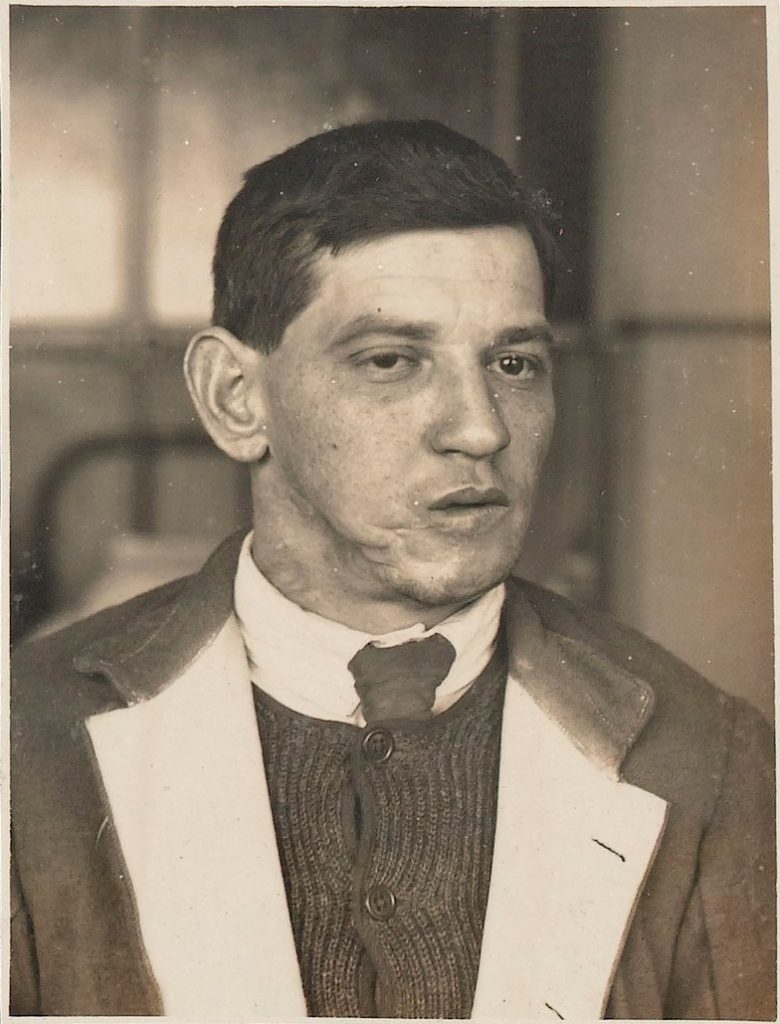
When publicised, such photographs raise questions about accountability and obligations. While historians want to know about the patient’s postwar life, legal and privacy frameworks tightly restrict access to identities. However, looking beyond official records reveals a richer narrative. By collaborating with archivists and building trust with surviving relatives, we can integrate veterans’ postwar stories into the research. If you choose to contact descendants, do so with immense care; inquiries may not always be welcome.
This shift in perspective transforms how we read medical photography. By placing the patient within the broader context of family history and lifelong care, we add a vital layer of interpretive complexity. While these images cannot explicitly show domestic life, conversations with descendants uncover personal struggles with healing, resilience, and recovery—often providing details that contradict or challenge official institutional records. These oral and family histories grant us access to the intimate, everyday realities of social and domestic life that medical archives inherently omit.
This collaborative approach empowers families to personalise institutions, highlighting the critical role that amateur family historians play in contemporary ethical debates. While reconstructing these personal narratives raises complex questions about privacy and the right to be forgotten, it also directly challenges dominant, oppressive institutional narratives. By doing so, we take a meaningful step toward acknowledging these individuals as people whose lives extended far beyond medical collections and admission records.
Jason Bate.